Economic Reform Push in India – FDI, Labour & GST Overhaul Explained for UPSC

Economic Reform Push in India – FDI, Labour & GST Overhaul
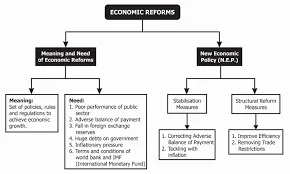
India’s economic reform journey has entered a decisive phase. Facing global uncertainty, supply chain shifts, and domestic employment challenges, the government has intensified reforms across Foreign Direct Investment (FDI), labour laws, and the GST framework. These reforms aim to improve ease of doing business, attract investment, formalise the economy, and sustain long-term growth.
For UPSC aspirants, this topic is crucial as it connects economic policy, governance, federalism, and social justice.
Why Economic Reforms Are Being Pushed Now
India’s reform push is driven by multiple structural realities:
-
Slowing global growth and geopolitical uncertainty
-
Competition from other emerging economies
-
Need for large-scale job creation
-
Requirement of higher tax efficiency and compliance
Rather than piecemeal changes, the government is attempting systemic reforms that can reshape India’s economic fundamentals.
FDI Reforms: Opening Doors to Global Capital
Key Changes in FDI Policy
India has gradually liberalised FDI norms across sectors such as:
-
Defence manufacturing
-
Insurance
-
Telecom
-
Space and aviation
-
Single-brand retail
Most sectors now allow automatic route FDI, reducing bureaucratic hurdles and approval delays.
Economic Impact of FDI Liberalisation
FDI brings more than capital. It contributes to:
-
Technology transfer
-
Managerial expertise
-
Integration with global value chains
-
Employment generation
For example, increased FDI in electronics manufacturing has supported India’s ambition to become a global manufacturing hub.
Strategic Concerns and Safeguards
While opening up, India has also introduced safeguards:
-
Screening investments from neighbouring countries
-
Protecting strategic sectors
-
Balancing openness with national security
This reflects a cautious but pragmatic reform approach.
Labour Law Reforms: Balancing Flexibility and Security
From Fragmentation to Labour Codes
Earlier, India had 29 central labour laws, often overlapping and contradictory. These have been consolidated into four labour codes:
-
Wages
-
Industrial Relations
-
Social Security
-
Occupational Safety
The objective is simplification, clarity, and compliance.
Benefits of Labour Reforms
The labour overhaul aims to:
-
Encourage formal employment
-
Reduce compliance burden on firms
-
Improve working conditions
-
Extend social security to gig and informal workers
This is critical for improving India’s manufacturing competitiveness.
Concerns and Criticism
Critics argue that:
-
Labour flexibility may weaken job security
-
Implementation delays reduce reform impact
-
States’ uneven adoption creates uncertainty
For UPSC answers, acknowledging both sides is essential.
GST Overhaul: Towards a Stable Tax Regime
Achievements of GST
GST has transformed India into a single indirect tax market by:
-
Removing cascading taxes
-
Improving tax transparency
-
Increasing formalisation
-
Boosting tax collections over time
Despite initial challenges, GST has stabilised significantly.
Recent GST Reforms
The reform focus has shifted to:
-
Rate rationalisation
-
Simplification of compliance
-
Plugging tax leakages
-
Strengthening GST Council coordination
Digital tools like e-invoicing and data analytics have improved enforcement.
Federalism and GST
GST is often described as a test of cooperative federalism. While disputes over compensation and rates exist, the GST Council remains a unique platform for Centre–State cooperation.
Combined Impact of FDI, Labour & GST Reforms
Taken together, these reforms aim to:
-
Improve ease of doing business
-
Boost private investment
-
Increase employment
-
Strengthen fiscal capacity
The idea is to create a virtuous cycle where growth, investment, and revenue reinforce each other.
Challenges in Implementation
Despite ambitious reforms, challenges remain:
-
State-level implementation gaps
-
Capacity constraints of institutions
-
Resistance from stakeholders
-
Short-term adjustment costs
Reforms succeed not on paper, but on the ground.
What UPSC Aspirants Should Focus On
For exam purposes, aspirants should:
-
Link reforms with growth and employment
-
Discuss Centre–State coordination
-
Evaluate social impact of reforms
-
Avoid one-sided narratives
UPSC rewards balanced, evidence-based answers.
Way Forward
India’s economic reform push must now focus on:
-
Policy stability and predictability
-
Faster dispute resolution
-
Skilling and human capital development
-
Trust-building with states and workers
Reforms should be seen as a continuous process, not one-time events.
Conclusion
The push for reforms in FDI, labour laws, and GST reflects India’s intent to build a resilient, competitive, and inclusive economy. While challenges remain, the direction of reform signals a long-term vision focused on growth with stability.
For future administrators, understanding these reforms is essential—not just for exams, but for real-world governance.
FAQs
1. Why are FDI reforms important for India’s growth?
They attract capital, technology, and global market access while generating employment.
2. What is the main objective of labour law reforms?
To simplify laws, encourage formalisation, and balance worker protection with business flexibility.
3. Has GST improved India’s tax system?
Yes, it has improved transparency and formalisation, though rate simplification is still needed.
4. Are these reforms interconnected?
Yes. FDI, labour flexibility, and GST together improve the overall investment climate.
5. Which UPSC papers cover this topic?
Primarily GS Paper 3, along with Essay and Interview.
0 Comments
No comments yet. Be the first to comment!
Reply to this Post
Newsletter
Letest Posts

Online vs Offline UPSC Test Series – Which is Better for Prelims & Mains 2026?
UPSC | 1 months ago
Basic Guide to Start Preparation for IAS & IPS
UPSC | 1 months ago
CSAT Preparation Time Table for UPSC 2026 – 30 / 60 / 90 Day Plan
UPSC | 1 months ago
How to Clear CSAT in First Attempt
UPSC | 2 months ago