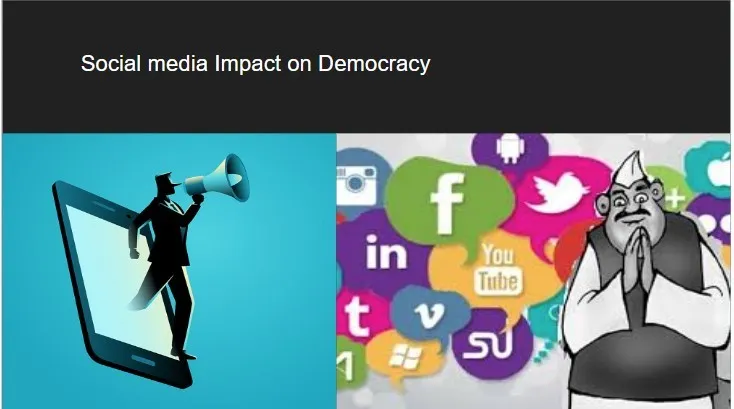
Social Media Influence on Democracy (2025 Perspective)
Social Media Influence on Democracy (2025 Perspective) – UPSC Notes
Social media has become one of the most powerful tools in modern society. It shapes public opinion, political communication, election campaigns, governance, and even national security. In 2025, it is almost impossible to imagine democracy without the impact of platforms like Facebook, X (Twitter), Instagram, WhatsApp, YouTube, and other digital spaces.
Social media acts as both a strength and a threat to democratic processes. This blog explains its role, benefits, risks, and regulatory needs in a UPSC-friendly manner.
What is Democracy in the Digital Era?
Democracy today is not just voting once in five years. Citizens participate daily through:
-
Online debates
-
Digital campaigns
-
Policy discussions
-
Questioning the government
-
Sharing information
Social media has transformed this participation into a 24×7 digital public sphere.
Positive Influence of Social Media on Democracy
1. Enhances Political Awareness
News, debates, fact-checking pages, and live discussions help citizens stay informed.
2. Promotes Public Participation
People express opinions freely and discuss social and political issues online.
3. Direct Communication Between Leaders & Citizens
Politicians now talk directly to people through posts instead of only through TV or newspapers.
4. Mobilisation & Social Movements
Social media plays a major role in:
-
Environmental movements
-
Women rights campaigns
-
Youth activism
-
Anti-corruption movements
5. Inclusive Democracy
Marginalized communities get a platform to express concerns that may not reach traditional media.
6. Transparency in Governance
Government departments use social media for:
-
Complaint redressal
-
Announcements
-
Public consultations
-
Online services
This improves trust and transparency.
Negative Influence of Social Media on Democracy
1. Fake News & Misinformation
False information spreads quickly and can influence public opinion before elections or during crises.
2. Election Manipulation
Targeted political ads, bot accounts, and algorithm manipulation can shape voting behavior.
3. Echo Chambers
People only see content they already agree with, reducing healthy political debate.
4. Hate Speech & Polarization
Social media sometimes increases communal tensions and political hatred.
5. Foreign Interference
Global powers may influence domestic politics through cyber propaganda.
6. Data Privacy & Surveillance
Big tech companies store and analyze user data, raising ethics and security concerns.
Social Media & Elections in India
In India, elections have become highly digital:
-
Political parties use WhatsApp groups for coordination.
-
Online advertisements target specific communities.
-
Influencers shape political narratives.
-
Deepfakes and edited videos impact public trust.
As per recent trends (2024–2025), the Election Commission has focused on:
-
Monitoring online campaigns
-
Regulating paid social media promotions
-
Fighting misinformation through fact-checking cells
Government Regulations & Measures
1. IT Rules, 2021 & Amendments
-
Platforms must remove harmful content.
-
Grievance officers must address complaints.
-
Fact-check units help identify fake news.
2. Election Commission Guidelines
-
Social media expenditure must be reported.
-
Parties must authenticate advertisements.
3. PIB Fact Check & Other Agencies
Help control misinformation during national events.
4. Digital Personal Data Protection Act (DPDP Act) 2023
Protects user data, consent, and privacy.
5. Cybercrime Prevention Agencies
Focus on hate speech, communal messages, and fake accounts.
Role of Social Media for Good Governance
Social media is becoming a major tool for governance through:
-
MyGov India platform
-
Digital grievance cells
-
Disaster management updates
-
Public awareness campaigns
-
Citizen–government interaction
This increases accountability and citizen participation.
International Perspective
Countries like:
-
USA
-
UK
-
Australia
-
EU Nations
are creating strict laws for regulating misinformation, AI-generated deepfakes, and political advertisements.
India’s approach is similar: balancing free speech with public order and digital safety.
Future Trends (2025 and Beyond)
1. Rise of AI-Generated Content
Deepfakes, AI speech generation, and political bots will challenge democracy.
2. Stricter Digital Regulations
Governments will tighten rules for accountability.
3. Verified Digital Identities
To prevent anonymous trolling and hate.
4. Increased Citizen Journalism
More people will cover political events through social media.
5. Digital Literacy Expansion
Higher education and school programs will teach responsible online behavior.
Way Forward
To protect democracy from digital challenges, India needs:
-
Stronger fact-check mechanisms
-
AI monitoring tools
-
Digital literacy education
-
Transparent political advertising rules
-
Strict action against misinformation
-
Balanced regulation that protects freedom of speech
Conclusion
Social media is one of the strongest pillars of modern democracy. It empowers citizens, strengthens accountability, and makes democracy more participatory. However, misinformation, polarization, and algorithm manipulation continue to threaten democratic values.
A balanced approach—where freedom of expression coexists with responsible digital behavior—is essential for a healthy democracy in 2025 and beyond.
0 Comments
No comments yet. Be the first to comment!
Reply to this Post
Newsletter
Letest Posts
Basic Guide to Start Preparation for IAS & IPS
UPSC | 1 months ago
CSAT Preparation Time Table for UPSC 2026 – 30 / 60 / 90 Day Plan
UPSC | 1 months ago
How to Clear CSAT in First Attempt
UPSC | 1 months ago