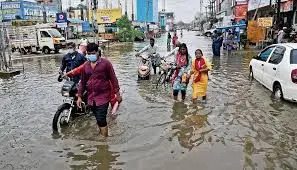
Urban Flooding in Indian Cities

Urban Flooding in Indian Cities – Governance Failure or Climate Change?
Urban flooding has become a recurring crisis in Indian cities. Every monsoon, images of submerged roads, stalled metros, flooded homes, and disrupted livelihoods dominate news headlines. Mumbai, Chennai, Bengaluru, Hyderabad, Delhi—almost no major city remains untouched.
The key question is: Is urban flooding primarily a result of climate change, or is it a failure of urban governance? A closer look suggests that while climate change acts as a stress multiplier, governance failures lie at the core of the problem.
Understanding Urban Flooding
Urban flooding refers to the accumulation of water in built-up areas due to intense rainfall, inadequate drainage, and poor urban planning. Unlike riverine floods, urban floods are:
-
Sudden
-
Localised
-
Highly disruptive to daily life
They cause economic losses, health risks, and long-term damage to urban infrastructure.
Role of Climate Change in Urban Flooding
Changing Rainfall Patterns
Climate change has altered India’s monsoon behaviour. Cities are now witnessing:
-
Short-duration, high-intensity rainfall
-
Increased frequency of extreme rain events
-
Unpredictable rainfall distribution
Such rainfall overwhelms drainage systems that were designed decades ago for lower rainfall intensity.
For example, a city may receive its monthly rainfall in just a few hours, leaving no time for natural absorption or drainage.
Rising Sea Levels and Coastal Cities
Coastal cities like Mumbai and Chennai face compound risks:
-
High tide combined with heavy rainfall
-
Sea water pushing back stormwater drains
-
Reduced outflow into the sea
This climate-induced pressure makes urban flooding more frequent and severe.
Governance Failure: The Core Issue
While climate change increases rainfall intensity, urban governance failures determine whether rainfall becomes a disaster.
Unplanned Urbanisation
Rapid urban growth has led to:
-
Construction on floodplains and wetlands
-
Encroachment of natural drains and lakes
-
Reduction of permeable surfaces
Cities like Bengaluru lost a large number of interconnected lakes, which earlier acted as natural flood buffers.
This is not a climate issue—it is a planning failure.
Inadequate Drainage Infrastructure
Most Indian cities still rely on:
-
Colonial-era drainage systems
-
Narrow stormwater drains
-
Poorly maintained sewer networks
These systems were never designed for today’s population density or rainfall intensity.
Additionally:
-
Drains are often clogged with solid waste
-
Stormwater and sewage lines are mixed
-
Regular desilting is neglected
This turns heavy rainfall into urban flooding within hours.
Institutional Fragmentation
Urban governance is split among multiple agencies:
-
Municipal corporations
-
Development authorities
-
State departments
-
Parastatal agencies
Lack of coordination leads to:
-
Blame-shifting during disasters
-
Poor accountability
-
Delayed response and recovery
Flood management often falls into this administrative grey zone.
Case Studies from Indian Cities
Mumbai Floods
Mumbai receives heavy rainfall every year, but flooding worsens due to:
-
Concretisation of open spaces
-
Encroachment of the Mithi River
-
Drainage outfalls blocked during high tide
Despite repeated floods, structural reforms remain slow.
Chennai Floods
Chennai’s flooding is linked to:
-
Shrinking wetlands and marshlands
-
Real estate development on water bodies
-
Poor reservoir management
The city floods during excess rainfall and faces water scarcity during dry months—highlighting governance contradictions.
Bengaluru Floods
Known as a “city of lakes”, Bengaluru now faces flooding due to:
-
Loss of lake connectivity
-
Construction over stormwater drains
-
Weak enforcement of land-use regulations
This shows how urban flooding can occur even in non-coastal cities.
Is It Climate Change or Governance Failure?
The answer is both, but not equally.
-
Climate change increases rainfall intensity and unpredictability
-
Governance failure converts rainfall into disaster
Cities with strong planning, functional drainage, and protected ecosystems are better able to handle extreme rainfall.
Thus, climate change is a trigger—but governance is the deciding factor.
Way Forward: What Needs to Change
Urban Planning Reforms
-
Protect wetlands, lakes, and floodplains
-
Enforce zoning regulations strictly
-
Integrate flood risk into master plans
Urban planning must treat water as a central element, not an obstacle.
Infrastructure Upgradation
-
Modernise stormwater drainage systems
-
Separate sewage and stormwater lines
-
Use permeable pavements and green infrastructure
Cities need drainage systems designed for future rainfall, not past averages.
Institutional and Governance Measures
-
Clear accountability among urban agencies
-
Regular audits of drainage infrastructure
-
Use of real-time rainfall and flood monitoring systems
Local governments must move from reactive relief to preventive planning.
Climate-Resilient Urban Development
-
Adopt sponge city concepts
-
Promote urban forests and green roofs
-
Integrate climate adaptation into Smart Cities Mission
Urban flooding must be addressed as a governance challenge within a changing climate.
Conclusion
Urban flooding in Indian cities cannot be blamed solely on climate change. While changing rainfall patterns add pressure, the root causes lie in poor urban planning, weak governance, and neglect of natural ecosystems.
Climate change makes the problem worse—but governance failure makes it inevitable. Addressing urban flooding therefore requires institutional reform, long-term planning, and climate-resilient urban development rather than short-term relief measures.
FAQs
1. Is climate change the main cause of urban flooding in India?
Climate change increases rainfall intensity, but governance failures like poor drainage and unplanned urbanisation are the main causes.
2. Why do Indian cities flood every year despite advance warnings?
Because drainage systems are inadequate, natural water bodies are encroached, and urban agencies lack coordination.
3. Can better urban planning reduce flood risk?
Yes. Protecting wetlands, upgrading drainage, and enforcing land-use laws significantly reduce flooding.
4. Why do even non-coastal cities like Bengaluru face floods?
Due to loss of lakes, blocked stormwater drains, and unchecked construction over natural drainage channels.
5. Which UPSC syllabus areas does this topic cover?
GS Paper 1 (Urbanisation), GS Paper 3 (Disaster Management, Climate Change), and Essay Paper.
0 Comments
No comments yet. Be the first to comment!
Reply to this Post
Newsletter
Letest Posts

Why UPSC Aspirants Must Understand AI Laws in 2026
UPSC | 5 hours ago
Kisan Diwas 2025 & MSP Debate
Education | 1 days ago
Best UPSC Coaching in Delhi Kaise Choose Kare 2026 Complete Checklist
UPSC | 5 days ago
Urban Flooding in Indian Cities
Education | 6 days ago