West Asia Security Crisis: Changing Equations and Strategic Restructuring
UPSC Current Affairs
Vedanta IAS Academy
06 May, 2026 02:51 PM

West Asia Security Crisis Explained
General Studies Paper – II: Governance, Constitution, Polity, Social Justice, and International Relations
Context
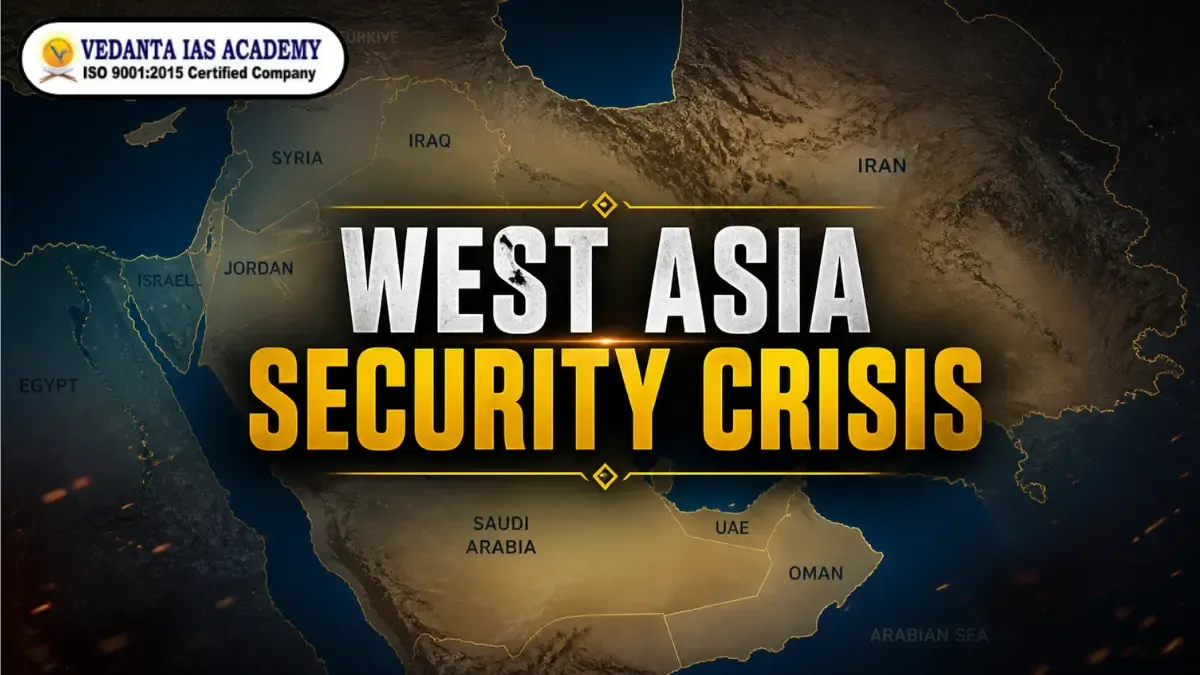
Since the Second World War, the security architecture of West Asia was primarily based on American dominance and the uninterrupted supply of oil. From the Cold War era to the 'Abraham Accords', the equations continued to change. However, during 2024-25, the Israel-Hamas and Israel-Hezbollah conflicts pushed this region into a new and devastating phase. Now in 2026, this conflict has directly transformed into a war of USA-Israel versus Iran, which has completely demolished the decades-old security system.
America, Israel, Iran, and West Asia
Each side has its own objectives in this triangular conflict:
- Israel: Its main objective is to eliminate Iran's 'proxy' networks (Hezbollah, Houthis) and to cripple Iran's nuclear capabilities.
- Iran: Tehran has adopted a 'Scorched Earth' policy, under which it is targeting American interests across the entire Persian Gulf.
- America: The stance of the Trump administration is uncertain; while they are supporting military strikes, they are also demanding that regional allies bear the economic burden of this war.
Reasons for Discussion: Recent Developments and Sequence of War
Events occurring in recent weeks have brought the world to the brink of a Third World War:
- Closure of the Strait of Hormuz: Iran has blocked the 'Strait of Hormuz', the most important route for global oil supply.
- Regional Strikes: Iran has carried out attacks on those locations in the Persian Gulf that are directly or indirectly linked to America.
- Display of Israeli Air Power: From the Red Sea to the Persian Gulf, Israel has demonstrated its aerial supremacy, in which the 2025 attack in Doha, Qatar, was a significant turning point.
Global Perspective: Stand of Various Countries
- Gulf Countries (Saudi Arabia, UAE, Kuwait): Instead of relying solely on America, these countries are now taking the help of 'détente' (easing of tensions) with Iran and Chinese mediation for their security.
- Arab League: Countries like Kuwait have raised questions about the incompetence of the Arab League, clearly showing internal division and mistrust within the Arab world.
- Asian Buyers: Countries like India and China, which are the main buyers of energy, are concerned about supply disruptions.
Role of Pakistan: Mediation between America and Iran
Pakistan has tried to present itself as a mediator in this crisis:
- Influence of Rawalpindi: Under the leadership of Field Marshal Asim Munir, Pakistan wants to reclaim its 'Islamic identity'.
- Nuclear Card: Being the only nuclear-armed Muslim country, Pakistan is trying to form a new security block along with Türkiye, Saudi Arabia, and Egypt.
- Access to Trump: Pakistan claims that its relations with Mr. Trump allowed it to become a bridge between Tehran and Washington.
Concerns for India
This conflict is extremely sensitive for India:
- Rise of Pakistan: If Pakistan succeeds as a mediator and forms a new security alliance with Türkiye-Egypt, it could be detrimental to India's strategic interests.
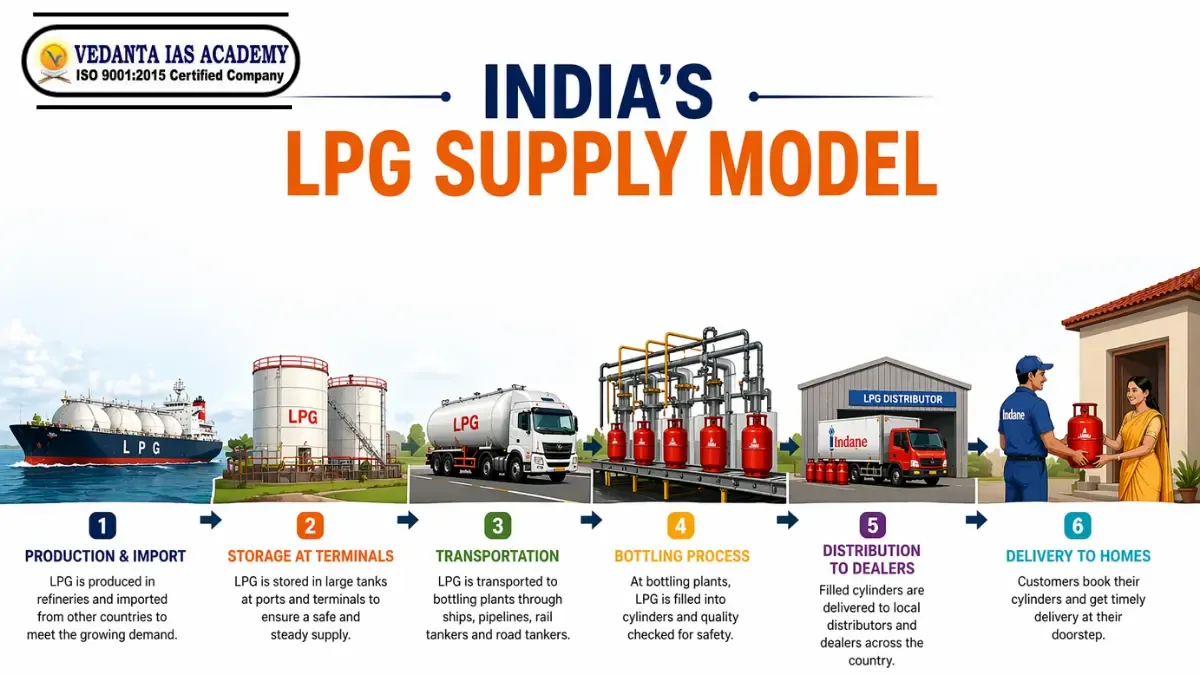
- Energy Security: India depends on this region for its energy needs. The closure of Hormuz directly affects India's economy.
- Indian Diaspora: Millions of Indians are working in Gulf countries, whose security is India's priority.
Failure of America in Providing Security
America's role in West Asia is now being seen as a 'factor of instability' rather than a 'security provider':
- From the Houthi attacks on Saudi oil plants in 2019 to the current war, America has failed to protect its allies.
- Economic Burden: The Trump administration’s talk of recovering the cost of war from allies has forced countries like Saudi Arabia and the UAE to rethink whether America is still a reliable partner.
Analysis: A Complex Puzzle
This war is not just military, but a battle for survival. Israel's unrestricted control over air power and Iran's guerrilla warfare policy have created a deadlock that cannot be solved through diplomacy alone. The sidelining of internal differences by Gulf countries (such as the Saudi-Qatar dispute) shows how great the threat is.
Way Forward
- Involvement of Iran: Iran's consent is mandatory for any permanent security framework. Peace in the region is not possible by isolating it.
- Regional Autonomy: Gulf countries must become 'unilaterally' active and increase their own operational capacity instead of relying only on America.
- Multilateral Mediation: Not just Pakistan or America, but large energy buyers like India and China should also be involved in the peace process.
Conclusion
West Asia today stands at a juncture from where the path of return is blurred. America's decreasing interest and the increasing aggression of Iran-Israel have created a security vacuum. In the coming times, this region will reshape its security system, which will likely be free from American influence and based more on regional cooperation. This war is changing not only borders but also the principles of the global balance of power.
Source - The Hindu Analysis