

You’ve probably heard these names before. Maybe at home, maybe in the news. But yeah, it can feel confusing at first. And that’s normal. Both LPG and LNG are fuels. We use them in daily life. But they are not the same thing. Their source, use, and even storage are different. Now slowly, step by step, we’ll understand everything.
Okay, first let’s talk about LPG.
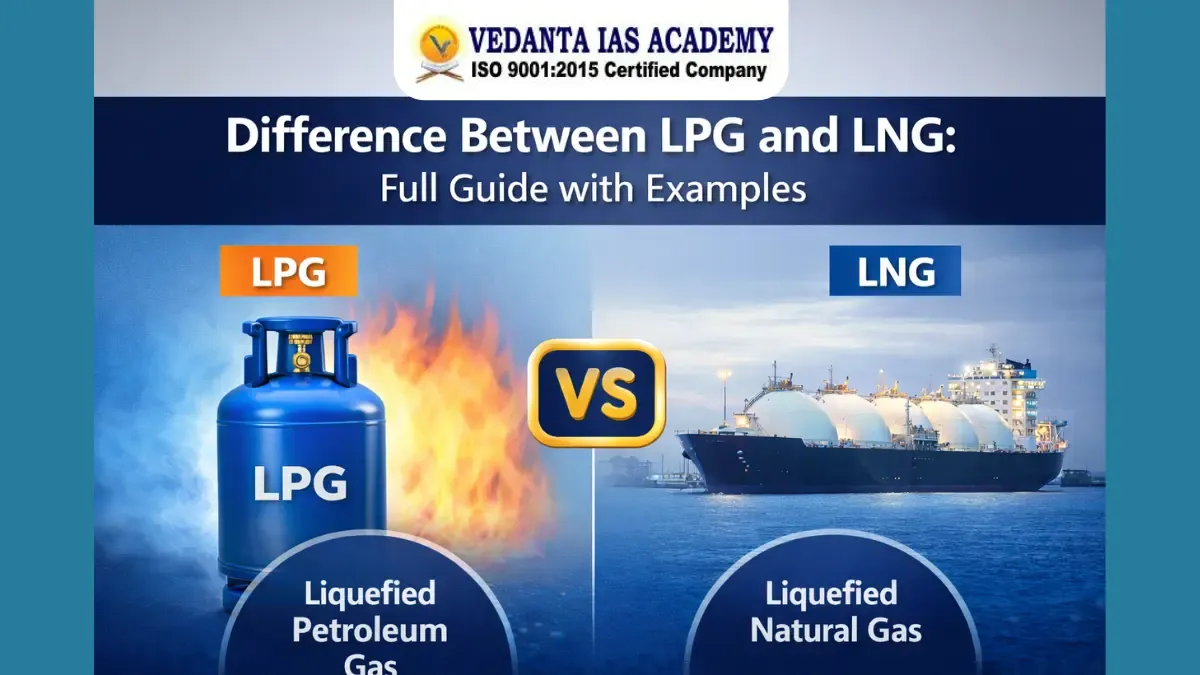
LPG full form is Liquefied Petroleum Gas.
In simple words, it is a gas that is stored in liquid form. Sounds a bit technical, but it’s not.
You use LPG at home in gas cylinders. Yes, the one used for cooking.
So basically, LPG = cooking gas in most homes.
Now, what is LPG made of?
It mainly contains:
These gases are taken from petroleum.
They are stored under pressure, so they become liquid. When released, they turn into gas again.
Simple, right?
Now let’s move to LNG.
LNG full form is Liquefied Natural Gas.
It is natural gas that is cooled to a very low temperature. Because of that, it turns into liquid.
Why do this? Because it becomes easier to store and transport.
LNG is mostly made of:
And yes, methane is a clean fuel.
That’s why LNG is considered more eco-friendly compared to many other fuels.
Today, we all need energy. Without it, daily life just stops.
Think about it:
Earlier, people used coal more. But it caused pollution. So now, cleaner fuels like LPG and LNG are used more.
And honestly, this shift is very important for the environment.
Now comes the main part — the difference between LPG and LNG.
Let’s not make it too complex. Just understand it like this.
1. Source (Petroleum vs Natural Gas)
LPG comes from petroleum.
LNG comes from natural gas.
So yeah, both have different origins.
2. Storage and Transportation
LPG is stored in cylinders under pressure.
LNG is stored at a very low temperature (very cold).
This makes LNG storage a bit more complex.
3. Energy Efficiency
LNG gives more energy compared to LPG.
So, industries prefer LNG for large-scale use.
4. Cost and Availability
LPG is easily available for homes.
LNG is used more in industries and big systems.
So their use depends on need.
Let’s see where these fuels are used.
LPG Uses:
LNG Uses:
Example:
Your kitchen uses LPG.
A factory uses LNG.
Both have good sides too.
LPG Advantages:
LNG Advantages:
So yeah, both are useful in their own way.
Now let’s be real. There are some problems too.
LPG Problems:
LNG Problems:
So safety and cost matter a lot here.
In India, LPG is used in almost every home.
Government schemes helped increase its use. That’s a good thing.
LNG is growing slowly in India. It is used in:
And yeah, India is trying to use more clean fuels now.
You can also read our guide on clean energy in India if you want to go deeper.
So now, you clearly understand the difference between LPG and LNG.
LPG is mostly used at home. LNG is used in big industries. Their source, storage, and uses are different. But one thing is common- both are cleaner fuels and better for the future. And honestly, understanding these basics helps a lot, especially if you are preparing for exams.

Hallo Team
kindly am inquiring how to start business with your company in large quantities and sell them in our country