Green Hydrogen Mission & India’s Net Zero 2070 Target

Green Hydrogen Mission & India’s Net Zero 2070 Target – Complete UPSC Notes (2025 Guide)
India is rapidly shifting towards cleaner energy. To achieve Net Zero by 2070, the Government of India has launched several major missions — and among them, the National Green Hydrogen Mission (NGHM) is one of the most important.
This topic is extremely relevant for UPSC Prelims, Mains (GS-3), and Essay.
What is Green Hydrogen?
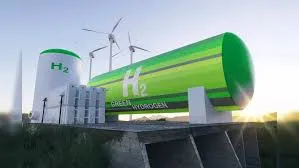
Hydrogen becomes Green Hydrogen only when it is produced using renewable energy sources like solar, wind, hydro, or biomass.
-
No carbon emissions
-
Can be stored & transported
-
Has high energy density
-
Works as a clean fuel for industries & mobility
Formula to remember for UPSC:
Hydrogen + Renewable Energy = Green Hydrogen
Why Green Hydrogen is Important for India?
1. Reduces Import Dependency
India is among the world’s largest importers of oil and natural gas. Green Hydrogen will reduce import bills.
2. Industrial Decarbonization
Hard-to-abate sectors will shift to green fuels:
-
Steel
-
Cement
-
Fertilizers
-
Refining
-
Heavy transportation
3. Promotes Renewable Energy Sector
Huge demand → more solar panels, wind farms, electrolyzers → boosts the green economy.
4. Strategic Energy Security
Green Hydrogen reduces vulnerability to global energy shocks.
National Green Hydrogen Mission (2023–2030)
Launched in January 2023, with a total outlay of ₹19,744 crore.
Mission Objective:
To make India a Global Hub for Green Hydrogen Production, Usage, and Export.
Targets Under the Mission
1. Production Target
-
5 million tonnes per annum (MTPA) of Green Hydrogen by 2030
-
Could reach 10 MTPA with international partnerships
2. Renewable Energy Addition
-
125 GW of renewable energy capacity required
3. Electrolyzer Manufacturing Target
-
60–100 GW electrolyzer capacity by 2030
4. Reduction in Emissions
-
50 million tonnes of CO₂ reduction every year
5. Investment Potential
-
₹8 lakh crore investment expected
-
6 lakh direct/indirect jobs
Key Components of the Mission
1. SIGHT Programme
(Subsidy scheme to encourage Green Hydrogen production & electrolyzer manufacturing)
-
Component I: Incentives for electrolyzer manufacturing
-
Component II: Incentives for Green Hydrogen production
2. Pilot Projects
In sectors:
-
Steel
-
Shipping
-
Transport
-
Gas blending
-
Mobility
3. R&D for Green Hydrogen
Focus areas:
-
Advanced electrolyzer technologies
-
Storage & transportation
-
Fuel cells
4. Hydrogen Hubs in India
Designated hubs for production + storage + transport.
Likely states: Gujarat, Rajasthan, Tamil Nadu, Karnataka.
How Green Hydrogen Helps Achieve Net Zero 2070
In the COP26 Summit (Glasgow), India announced Net Zero by 2070.
Green Hydrogen Supports All 5 Climate Targets (Panchamrit):
-
500 GW renewable energy capacity by 2030
– GH increases renewable demand -
50% energy needs from renewables
– Green Hydrogen accelerates clean power usage -
Reduction of emissions by 1 billion tonnes
– Heavy industries shift to GH -
Carbon intensity reduction to 45%
– GH replaces fossil fuels -
Net Zero by 2070
– GH becomes the energy backbone
Sectors where GH directly cuts carbon:
-
Steel → Green Steel
-
Transport → Fuel cell vehicles
-
Fertilizers → Green Ammonia
-
Refining → Low-emission hydrogen
-
Shipping → Hydrogen-based fuels
Challenges in Green Hydrogen Adoption
1. Cost Is Very High
Green Hydrogen = ₹300–400 per kg
Grey Hydrogen = ₹150 per kg
2. Storage Issues
Needs high-pressure tanks or cryogenic temperatures.
3. Transportation Challenges
Pipelines need upgradation.
4. Electrolyzer Dependence
India imports most electrolyzers — cost is high.
5. Water Requirement
Electrolysis requires large quantities of pure water.
Government Measures to Overcome Challenges
-
PLI schemes for electrolyzers & renewable components
-
Infrastructure for Hydrogen Hubs
-
R&D missions
-
Collaboration with Japan, EU, UAE, Korea
-
Standardization & safety norms
India’s Global Position in Green Hydrogen
India is emerging as a leading player:
-
Lowest solar energy cost in the world
-
Large coastline for hydrogen export
-
Mega industrial projects (Reliance, Adani, NTPC, IOCL)
-
Partnership with Japan for fuel cell technology
Way Forward
-
Strengthen electrolyzer manufacturing in India
-
Build hydrogen pipelines
-
Improve electrolysis efficiency
-
Promote Green Hydrogen ships & trains
-
Expand public-private partnerships
Conclusion
Green Hydrogen is not just a clean fuel — it is the future of India’s energy strategy.
With initiatives like the National Green Hydrogen Mission, India is preparing to achieve the ambitious Net Zero 2070 target.
For UPSC, this topic combines environment, economy, technology, and geopolitics — making it extremely important for all stages of the exam.
0 Comments
No comments yet. Be the first to comment!
Reply to this Post
Newsletter
Letest Posts


Basic Guide to Start Preparation for IAS & IPS
UPSC | 1 months ago
CSAT Preparation Time Table for UPSC 2026 – 30 / 60 / 90 Day Plan
UPSC | 1 months ago
How to Clear CSAT in First Attempt
UPSC | 1 months ago